
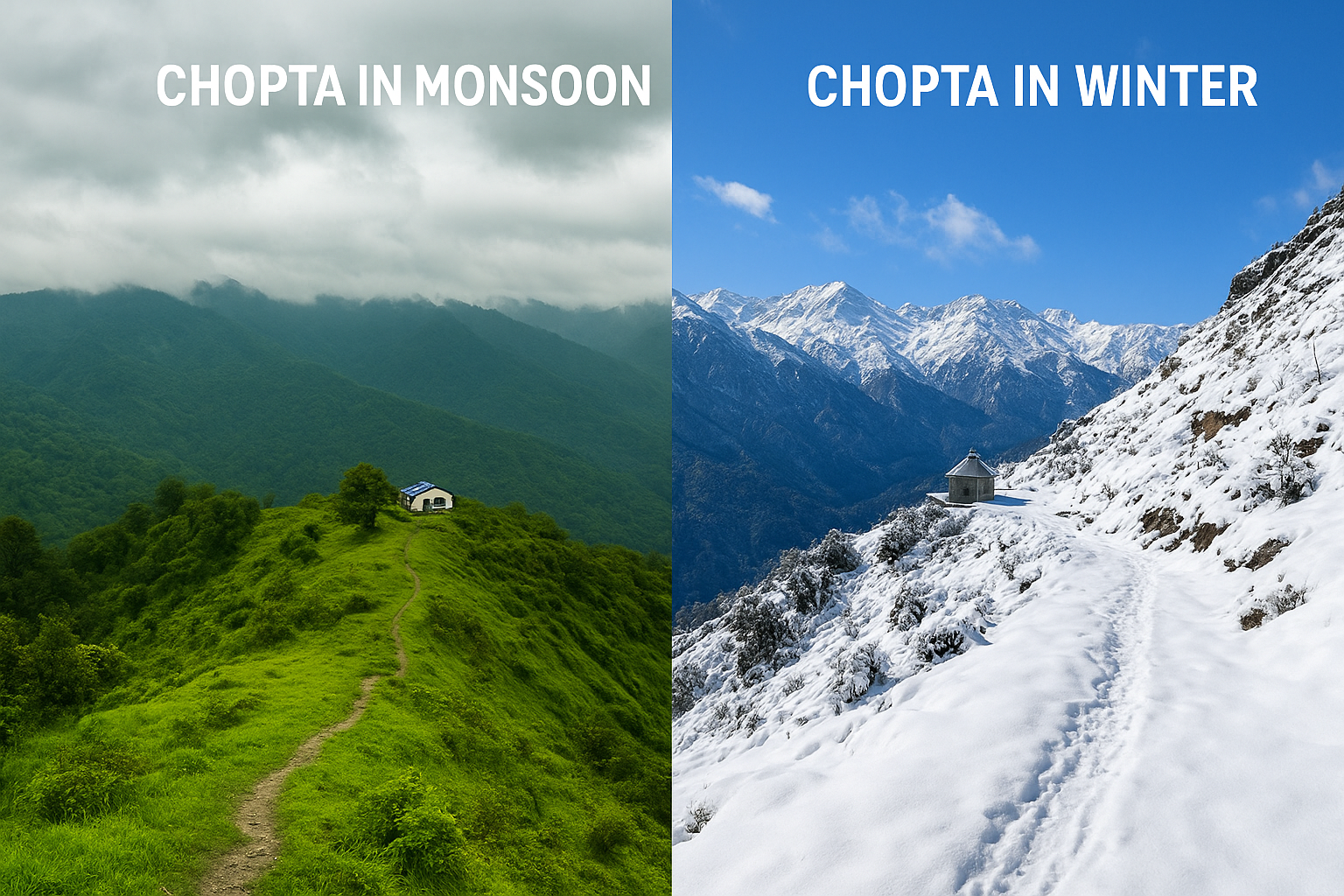
Chopta, known as the Mini Switzerland of India, offers two dramatically different experiences during the monsoon and winter seasons. From lush green meadows drenched in rain to snow-covered trails glowing under the winter sun, each season has its own charm and challenges. Travellers booking a Chopta tour package often wonder which time of the year offers the best blend of adventure, safety, and scenic beauty. Understanding the seasonal differences is essential for choosing the right itinerary, selecting proper gear, and planning a comfortable journey. This guide compares monsoon and winter in Chopta to help you pick the ideal trekking season.
Weather Variations in Chopta: How Seasons Affect the Chopta Tour Package Experience
The weather in Chopta changes dramatically between monsoon and winter, and these shifts directly influence the overall experience of any Chopta tour package. While the monsoon months bring lush greenery, misty forests, and fresh mountain air, the winter season transforms Chopta into a pristine white wonderland. Trekkers planning a Chopta tour package from Delhi often base their travel dates purely on weather preferences, as the climate plays a crucial role in determining trail conditions, difficulty level, and scenic beauty.
During the monsoon season, Chopta blooms with dense forests, vibrant meadows, and flowing streams. However, frequent rainfall can make trekking trails slippery, especially for routes like the Chopta Chandrashila trek and the Tungnath Temple trek. Visibility may be lower due to fog, but the atmosphere is refreshing, quiet, and perfect for travelers who enjoy peaceful nature walks. Monsoon is also ideal for photographers who love capturing dramatic clouds and lush backdrops.
Winter, on the other hand, offers a completely different charm. Snow-covered landscapes, frozen water bodies, and crisp mountain air make it a dream destination for adventure lovers. Popular routes such as the Chandrashila summit trek and the Chopta Tungnath trek become more challenging as the trails get blanketed with fresh snow. This season demands proper winter gear, but the payoff is extraordinary — panoramic Himalayan views, golden sunrises from Chandrashila, and serene snowy forests.
Ultimately, whether you choose monsoon or winter, each season in Chopta creates a unique trekking experience. Understanding the weather helps you pick the perfect Chopta tour package that matches your expectations, fitness level, and preferred scenery. Both seasons promise unforgettable moments, as long as you are prepared for the natural elements they bring.

Trail Conditions: Monsoon Slush vs Winter Snow on Popular Chopta Treks
One of the biggest differences between monsoon and winter travel in Chopta lies in the condition of trekking trails. Trekkers booking a Chopta tour package from Delhi often ask which season is better for trekking — the answer depends entirely on the type of terrain you enjoy and your trekking experience. Each season brings its own challenges and rewards, especially on well-known routes such as the Chopta Chandrashila trek and the Chopta Tungnath trek.
During the monsoon, the entire region becomes lush and vibrant. The trails are soft, wet, and occasionally muddy due to frequent rainfall. While this enhances the natural beauty of the Chopta forest and meadows, it also makes trekking slightly more challenging for beginners. Routes like the Tungnath Temple trek require caution during this time, as stones and steps may become slippery. However, the refreshing mist, waterfalls, and rich greenery make monsoon treks ideal for nature lovers and photographers.
In winter, the trail challenges shift from slippery mud to thick layers of snow. The Chopta Chandrashila trek from Delhi becomes a popular choice among snow lovers who want to experience icy paths, frozen meadows, and breathtaking sunrise views from the Chandrashila summit. While the terrain is more stable than monsoon slush, the snow-covered sections require proper gear like spikes, gaiters, and trekking poles. The Chopta Tungnath trek also becomes magical under fresh snowfall, making it a favorite among adventure seekers.
Whether you prefer the soft monsoon slush or the crisp crunch of winter snow, understanding the terrain helps you choose the right Chopta tour package for your fitness level and adventure preferences. Both seasons offer beautiful experiences, but winter demands better preparation, while monsoon demands more caution.

Scenic Beauty Compared: Lush Monsoon Greens vs Snowy Winter Landscapes
The natural beauty of Chopta changes dramatically between monsoon and winter, creating two completely different experiences for travelers. Many trekkers book Chopta tour packages based on the kind of scenery they want to witness — vibrant greenery or peaceful snowfields. Both seasons offer breathtaking visuals, but each has its own charm that enhances popular routes like the Chopta Chandrashila trek and the Chopta Tungnath trek.
In the monsoon months, Chopta turns into a living canvas of green. Dense forests glow with fresh leaves, meadows like Bugyal fields become lush and soft, and waterfalls form along the trail. Misty clouds drift between the trees, creating a mystical atmosphere, especially along the Tungnath Temple trek route. For travelers who enjoy nature at its most alive and colorful, this season provides the perfect escape. Even the Chandrashila summit offers unique views when clouds part to reveal layers of mountains wrapped in moisture.
Winter presents Chopta in its most magical form. The entire region transforms into a serene snow-covered haven, perfect for trekkers seeking a true Himalayan winter experience. The crunchy snow paths, frozen lakes, and crystal-clear skies make the Chandrashila trek especially rewarding, offering panoramic views of giants like Nanda Devi, Trishul, and Chaukhamba. Travelers joining a Chopta tour package from Delhi during winter often do so specifically to witness these snowy landscapes and capture stunning sunrise shots from the Chandrashila summit.
Whether you prefer the monsoon’s fresh greenery or the winter’s pure white beauty, both seasons offer unforgettable scenic experiences. Your choice depends on whether you want the vibrant energy of rain-washed forests or the peaceful silence of snow-clad trails during your Chopta Chandrashila trek from Delhi.

Trekking Difficulty: Comparing Monsoon Challenges to Winter Adventures
Trekking difficulty in Chopta changes significantly between monsoon and winter, making it important for travelers to choose the right season based on their fitness level and experience. Many people booking Chopta tour packages often underestimate how different the challenges can be, especially on popular trails like the Chopta Chandrashila trek, Chandrashila summit trek, and the Chopta Tungnath trek.
During the monsoon season, the primary challenge is slipperiness. Trails become muddy, stones get mossy, and steps along the Tungnath Temple trek can be wet and unstable. Even experienced trekkers need to move cautiously because rainfall and fog can reduce visibility. While the trek is still accessible, the monsoon demands patience, waterproof gear, and careful footing. Beginners may find it slightly harder, especially if they are not used to trekking in rain-soaked terrain.
Winter brings a different level of difficulty. As snowfall increases, trails become covered with ice and hard-packed snow. This makes the Chopta Chandrashila trek from Delhi more demanding but also incredibly rewarding. Trekkers need microspikes, trekking poles, and insulated boots to travel safely. The steep climb to the Chandrashila summit trek becomes more adventurous as windchill increases and temperatures drop sharply during the early morning ascent. Similarly, the Chopta Tungnath trek transforms into a snowy pathway that is breathtaking but requires good physical endurance.
In summary, monsoon trekking challenges revolve around wet terrain and reduced visibility, while winter trekking challenges come from cold temperatures, icy patches, and steeper snow climbs. Choose your Chopta tour package from Delhi based on whether you prefer monsoon’s slippery excitement or winter’s thrilling snowy adventure.

Accessibility & Road Conditions: Reaching Chopta in Monsoon vs Winter
Accessibility to Chopta changes noticeably between monsoon and winter, and this difference plays a major role when choosing the right season for your journey. Travelers booking a Chopta tour package from Delhi often look for smooth travel experiences, but the route’s condition varies significantly with seasonal weather patterns. Understanding these changes helps you plan better, whether you're traveling for the Chopta Chandrashila trek or the Chopta Tungnath trek.
During the monsoon months, the roads leading to Chopta become challenging due to rainfall. Landslides, roadblocks, and muddy patches are common on routes passing through Rudraprayag and Ukhimath. While the authorities work quickly to clear most blockages, delays are still possible. The advantage, however, is the beautifully refreshed landscape — green valleys, waterfalls along the road, and cool weather make the journey scenic despite the challenges. Travelers need to be patient and flexible with timing, especially if they plan to start the Chopta Chandrashila trek during rainy weeks.
Winter, especially from December to February, brings its own set of travel difficulties. Snowfall can block certain stretches near Chopta, particularly the final ascent from Duggalbitta and Baniyakund. Vehicles often require chains for traction, and early morning travel becomes tricky due to black ice. For those opting for Chopta tour packages, transport operators usually manage these conditions well by providing experienced mountain drivers. Despite the challenges, reaching Chopta in winter is a magical experience — white landscapes, clean roadsides, and crisp views of the Himalayas make the journey unforgettable.
Whether you prefer the monsoon’s lush, rain-washed views or the winter’s snowy, dramatic landscapes, each season affects accessibility differently. Travelers preparing for the Chandrashila summit trek or Chopta Tungnath trek from Delhi should plan based on their comfort level with road conditions and weather extremes.
Why Choose a Chopta Tungnath Trek for a Balanced Spiritual & Adventure Experience?
The Chopta Tungnath trek is one of the most rewarding journeys in Uttarakhand, offering both spiritual depth and Himalayan adventure in a single route. Whether you book a complete chopta tour package or travel independently, the trek provides peaceful landscapes, dense forests, and an atmosphere that refreshes the mind and body. Winter 2025 is especially magical, with snow-covered trails and calm surroundings ideal for travellers seeking a meaningful escape.
Many travellers begin their experience through a chopta tour package from Delhi, which ensures smooth travel, comfortable stays, and guided trekking support. The route is beginner-friendly, making it suitable for families, solo travellers, and adventure enthusiasts who want to explore the stunning Himalayan region without extreme difficulty.
One of the biggest highlights is the legendary tungnath temple trek, the highest Shiva temple in the world. The spiritual ambience combined with snow-laden pathways offers a deeply fulfilling experience. Many visitors pair this with the chopta chandrashila trek, leading to the breathtaking Chandrashila peak known for its sunrise views and the iconic chandrashila summit trek.
For travellers who prefer organised journeys, chopta tour packages make the entire experience stress-free by including meals, permits, trekking gear support, and expert guides familiar with winter conditions. This allows you to enjoy the scenic beauty, wildlife sightings, and cultural richness without worrying about logistics.
Whether you're planning a weekend escape or a spiritual winter adventure, the chopta tungnath trek and the chopta tungnath trek from Delhi provide the perfect blend of tranquility, devotion, and excitement. This unique combination is what makes Chopta an unforgettable destination for Winter 2025 and beyond.

Best Time for the Chandrashila Summit Trek in Winter & Monsoon
- The chandrashila summit trek offers different experiences in winter and monsoon, making it important to choose the right season before booking a chopta tour package.
- Winter is the most popular time for the chopta chandrashila trek from Delhi because the entire region gets covered in fresh snow, offering spectacular views of Nanda Devi, Trishul, and Chaukhamba peaks.
- During winter, trekkers can expect clear skies, crisp mountain air, and breathtaking sunrise views from the summit, but must also be prepared for extremely cold temperatures.
- The monsoon season transforms the chopta chandrashila trek into a lush green paradise with blooming flora, misty forests, and peaceful trails ideal for nature lovers.
- However, monsoon trails can become slippery and foggy, making this season better suited for trekkers with prior high-altitude or rainy-season trekking experience.
- Many travellers prefer winter when booking a chopta tour package from Delhi because the packages usually include winter-ready stays, meals, guides, and safety gear.
- The tungnath temple trek is stunning in both seasons—snow-covered paths in winter and vibrant meadows in monsoon—but each requires different preparation.
- Winter is ideal for those seeking a snowy adventure, while monsoon is perfect for travellers who enjoy greenery, solitude, and dramatic cloud-filled landscapes.
- Trekkers should consider their fitness level, comfort with cold or rainy weather, and photography preferences before choosing a season.
- No matter the season, the chandrashila trek promises unforgettable Himalayan views, making it one of the most rewarding short treks in Uttarakhand.

How Seasonal Changes Affect Chopta Tour Packages
Chopta tour packages vary significantly depending on the season, with monsoon and winter offering unique experiences and itineraries. Travelers booking a chopta tour package from Delhi should be aware that operators adjust their services based on weather, trail conditions, and local accommodation availability to ensure safety and comfort.
During winter, chopta tour packages focus on snow trekking, guided climbs to the Chandrashila summit trek, and visits to the Tungnath Temple trek. Packages typically include warm stays, insulated tents, winter gear guidance, and experienced trekking guides. This makes winter an excellent season for beginners and families who want to experience snow safely.
Monsoon chopta tour packages, on the other hand, highlight lush green meadows, waterfalls, and forest trails on the Chopta Chandrashila trek. Since the trails can get slippery, packages often include expert guides, safety equipment, and limited trekking groups to reduce risk. Travelers also get an opportunity to explore the region’s flora and fauna more closely during the rainy season.
Many chopta tour packages from Delhi now offer flexible options for combining both treks—such as the Chopta Tungnath trek and the Chopta Chandrashila trek from Delhi—allowing adventurers to experience diverse terrains and weather conditions within the same itinerary. Seasonal planning ensures that travelers enjoy the best of the Himalayas regardless of the time of year.
Choosing Between Monsoon and Winter for Your Chopta Chandrashila Trek
When planning your adventure, choosing the right season for the Chopta Chandrashila trek is crucial. Many travelers book a chopta tour package from Delhi and want to know whether monsoon or winter will provide the best overall experience. Each season offers distinct challenges and rewards that affect both trekking conditions and scenic beauty.
During winter, the Chopta Chandrashila trek becomes a snowy wonderland. Crisp air, panoramic Himalayan views, and snow-covered trails make it ideal for those seeking a classic winter trekking experience. Chopta tour packages in winter often include warm accommodations, trekking guides, and safety gear, making it accessible even for beginners.
In the monsoon, the Chopta Chandrashila trek is lush and vibrant, with green meadows, waterfalls, and forest trails. The trails can be slippery, so trekkers need extra caution. Monsoon packages focus on guided treks, smaller groups, and tips for navigating wet trails safely. Nature lovers and photographers often prefer this season for its dramatic landscapes and rich biodiversity.
Regardless of the season, trekkers combining the Chopta Tungnath trek or visiting the Tungnath temple trek can enjoy a rewarding spiritual and adventure experience. Booking a well-planned chopta tour package ensures seamless transport, meals, accommodation, and expert guidance, making your Himalayan journey memorable and safe.
What to Expect in Winter vs Monsoon on Your Chopta Trek
Planning for the right season is essential when embarking on the Chopta Chandrashila trek or the Chopta Tungnath trek. Winter and monsoon offer very different experiences, and knowing what to expect helps you choose the best chopta tour package for your adventure.
In winter, travelers can enjoy snow-covered trails, crisp mountain air, and panoramic views of the Himalayas. The Chopta Chandrashila trek from Delhi becomes a serene white wonderland, while the Tungnath temple trek is equally magical with a blanket of snow. Chopta tour packages during winter often include insulated tents, warm stays, and guidance for navigating icy paths safely.
During the monsoon, the trails transform into lush green landscapes with waterfalls, flowering meadows, and misty valleys. While this season offers beautiful scenery, the Chopta Chandrashila trek can be slippery, and visibility may reduce due to rain and fog. Monsoon chopta tour packages focus on safety, smaller trekking groups, and expert guidance to ensure a smooth journey.
Whether you prefer snowy winter trails or lush monsoon greenery, planning your trek with a reliable chopta tour package ensures comfort, safety, and a memorable Himalayan adventure.

Safety Measures to Take During Your Chopta Trek
Safety should always be a priority when planning the Chopta Chandrashila trek, Chopta Tungnath trek, or any high-altitude Himalayan adventure. Booking a chopta tour package from Delhi ensures you have experienced guides and proper safety protocols.
Key safety measures include wearing appropriate winter or rain gear depending on the season, carrying trekking poles for icy or slippery trails, and using crampons or microspikes during snowy conditions. Hydration and energy intake are crucial, so carry insulated water bottles and snacks for the journey.
Follow the advice of guides, stay on marked trails, and avoid trekking alone, especially in winter when trails can be covered with snow and ice. Ensure that you have emergency contacts, first-aid kits, and communication devices handy. Most chopta tour packages include these safety essentials for a worry-free experience.
Additional precautions include acclimatizing properly before attempting steep sections like the Chandrashila summit trek, monitoring weather updates, and taking breaks as needed. Observing these measures allows trekkers to fully enjoy the Chopta Tungnath trek and Chopta Chandrashila trek from Delhi safely.

Wildlife and Flora to Spot During Monsoon vs Winter in Chopta
Chopta is not only famous for its trekking trails but also for its rich biodiversity. Whether you are on a Chopta Chandrashila trek, Chopta Tungnath trek, or travelling through a well-planned chopta tour package from Delhi, keeping an eye out for local wildlife and flora enhances the trekking experience. The region’s ecosystems change drastically between monsoon and winter, offering unique sights in each season.
During the monsoon, Chopta comes alive with greenery, flowering shrubs, and dense forests. Trekking on the Chopta Chandrashila trek during this season, you may spot Himalayan monals, woodpeckers, and colorful butterflies. Streams and waterfalls swell, and rhododendron trees bloom, painting the landscape with vibrant colors. Monsoon also attracts smaller mammals like Himalayan martens and barking deer along the trails.
In winter, the landscape transforms into a snowy paradise. While some wildlife migrates to lower altitudes, trekkers can still spot Himalayan snowcocks, musk deer tracks, and occasionally elusive snow leopards from a distance. The flora becomes dormant under snow, but frost-covered pine and oak forests provide a magical backdrop for the Chopta Tungnath trek or the Chandrashila summit trek. Winter also makes it easier to spot animal tracks on snow-covered trails.
Travelling with a chopta tour package ensures that you have guides familiar with local wildlife behavior and can point out flora and fauna safely without disturbing the environment. Whether you choose the monsoon’s lush vibrancy or the serene winter snow-covered meadows, observing Chopta’s wildlife and flora adds an unforgettable dimension to your Himalayan trekking adventure.
